


Personalized and Group Fitness Coaching
Our mission is to create a supportive and inclusive environment where clients can achieve their health and wellness goals. Through expert guidance, we strive to make sustainable changes that promote long-term vitality, strength, and well-being.
Contact us
Contact the SusdeX team to strengthen your sustainability, innovation, and risk management processes.
We are here to answer your questions, offer solutions tailored to your needs, and support you on your journey of sustainable transformation.
+372 698 99 94 +372 880 47 02
SusdeX Sustainability Rating Services OÜ
Ahtri tn 12, 15551 Tallinn Estonia
Sector Scope and Strategic Importance
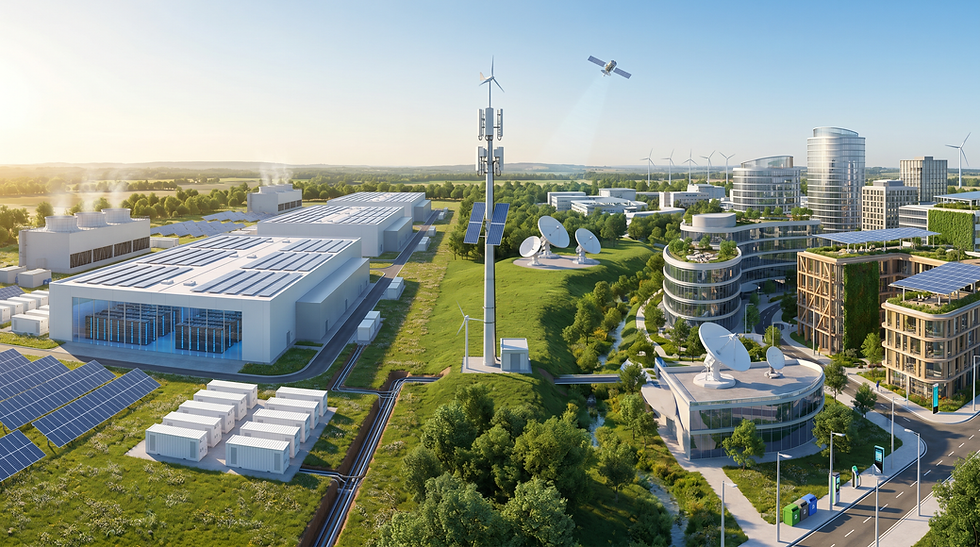
The Information and Communication sector corresponds broadly to NACE Section J in the European classification system. It includes publishing activities, motion picture and broadcasting activities, telecommunications, computer programming and consultancy, information services, cloud services, data processing, hosting, digital platforms, software, cybersecurity, artificial intelligence infrastructure and related digital services. In sustainability terms, the sector is strategically important because it is both an enabler of decarbonisation across other sectors and a growing source of environmental pressure through data centres, networks, electronic devices and AI-related computing demand.
In the EU, the ICT sector generated 5.2% of gross value added in 2023 and employed more than 7.36 million people, corresponding to 3.4% of total employment. Eurostat also reports that nearly 18% of total business enterprise R&D expenditure in the EU is attributable to the ICT sector, showing its central role in innovation and productivity transformation.
Economic Profile and Sector Structure
The Information and Communication services sector is one of the most knowledge-intensive parts of the European economy. In 2022, Eurostat reported around 1.4 million enterprises in the EU information and communication services sector, employing almost 7.2 million people and accounting for 6.6% of value added in the EU business economy. The dominant subsector was computer programming, consultancy and related activities, which generated 59.8% of employment and 51.1% of value added within the sector.
This structure means that the sector’s sustainability profile is not limited to telecommunications or media. Software, cloud computing, AI, cybersecurity, data services and digital consulting increasingly shape the environmental and social footprint of the sector. The main sustainability issue is therefore the balance between the sector’s positive enabling effects—digitalisation, dematerialisation, smart energy systems, remote services and efficiency gains—and its direct impacts from electricity consumption, hardware production, data centre expansion, water use, e-waste and digital inequality.
Environmental Sustainability Assessment
The environmental footprint of the Information and Communication sector is concentrated in four main areas: electricity consumption, greenhouse gas emissions, electronic equipment lifecycle impacts and water use in cooling systems. The most material environmental hotspot is the rapid growth of data centres and AI-related infrastructure. The International Energy Agency states that global data centre electricity consumption is projected to more than double and reach around 945 TWh by 2030, representing just under 3% of global electricity consumption in 2030. From 2024 to 2030, data centre electricity consumption is projected to grow by around 15% per year, more than four times faster than electricity consumption growth in other sectors.
The IEA also reported that electricity demand from data centres increased by 17% in 2025, while electricity consumption from AI-focused data centres grew even faster. This shows that AI infrastructure has become a direct sustainability issue rather than only a technology or productivity issue.
In Europe, the rapid expansion of data centres has become a policy concern. Reuters reported, based on McKinsey analysis, that European data centre power demand could nearly triple by 2030, with electricity consumption increasing from around 62 TWh to more than 150 TWh, potentially reaching about 5% of total European electricity consumption.
From a sustainability perspective, this creates several risks. First, data centres can increase pressure on electricity grids, especially where new demand is concentrated geographically. Second, if electricity supply is not matched by additional renewable or low-carbon capacity, the sector’s carbon footprint may rise despite efficiency improvements. Third, cooling systems may increase water stress in regions already exposed to climate-related drought and heat risks. Fourth, the production and replacement of servers, network equipment, smartphones, computers and electronic devices increase material extraction, critical raw material dependence and e-waste.
The EU has begun to respond through regulatory measures. The revised Energy Efficiency Directive introduced sustainability reporting obligations for data centres. The European Commission states that it will regularly assess the energy efficiency and sustainability of EU data centres based on reported data and indicators, and in July 2025 it published an assessment using the 2024 reporting period.
The EU Code of Conduct on Data Centre Energy Efficiency also provides best-practice guidance for operators, focusing on improved energy management, cooling efficiency, server utilisation, monitoring and infrastructure optimisation. The 2025 Best Practice Guidelines are designed to help data centre operators identify and implement energy-efficiency measures.
Circular Economy and Electronic Waste
A major environmental issue for the Information and Communication sector is the lifecycle of electronic equipment. Devices, servers, routers, cables, batteries and consumer electronics create impacts through raw material extraction, manufacturing emissions, short replacement cycles and end-of-life waste. The EU’s Right to Repair Directive is therefore highly relevant for the sector. The European Commission states that the Directive on common rules promoting the repair of goods was adopted on 13 June 2024, entered into force on 30 July 2024, and must be transposed by Member States and applied from 31 July 2026.
For ICT companies, this means sustainability strategies should increasingly include product durability, repairability, modular design, spare parts availability, software support duration, take-back systems, responsible recycling and certified refurbishment. For service-based ICT companies, procurement policies should prioritise longer equipment lifetimes, refurbished hardware, energy-efficient devices and responsible end-of-life treatment.
Social Sustainability Assessment
The Information and Communication sector is a high-skill, high-growth employment area, but it faces important social sustainability challenges. The most important issues are digital skills shortages, gender inequality, worker well-being, cybersecurity-related labour pressure, inclusive access to digital services, and the social consequences of automation and AI.
Eurostat reports that in 2024 there were 10.3 million ICT specialists in the EU, representing 5.0% of total employment, but this remains more than 9.7 million below the EU’s 2030 Digital Decade target.
Gender imbalance is also significant. Eurostat data show that women represented only 19.5% of ICT specialists in the EU, while men represented 80.5%. This makes gender inclusion one of the sector’s most material social sustainability gaps.
The social sustainability agenda should therefore focus on increasing the participation of women in ICT, expanding digital skills training, improving access for disadvantaged groups, supporting lifelong learning, preventing algorithmic discrimination, protecting personal data, strengthening cybersecurity awareness and managing the labour impacts of AI adoption. The European Commission’s Women in Digital Scoreboard also highlights the lack of women in digital jobs and careers as both a fairness issue and an economic loss for the EU.
Governance, Regulation and ESG Expectations
Governance risks in the Information and Communication sector are increasingly complex. The sector manages critical digital infrastructure, personal data, cybersecurity systems, AI models, digital platforms and cross-border information flows. Sustainability governance must therefore include not only environmental reporting but also data protection, cybersecurity, AI ethics, digital rights, supply-chain due diligence and transparency.
The EU’s Digital Decade framework is one of the main strategic policy references. The European Commission’s State of the Digital Decade 2025 report identifies progress in areas such as 5G coverage and edge nodes but also states that the EU remains far from several key targets, including AI, semiconductors, stand-alone 5G, digital skills and protection of vulnerable groups such as children.
The governance agenda is also shaped by sustainability reporting requirements, especially the Corporate Sustainability Reporting Directive and European Sustainability Reporting Standards for larger companies. ICT companies are expected to disclose material climate, energy, workforce, value-chain, data governance and business conduct issues where applicable. In parallel, data centre operators face more specific energy-performance and sustainability disclosure obligations under EU energy-efficiency rules.
Key Sustainability Risks
The main sustainability risks for the Information and Communication sector are rising electricity demand from data centres and AI, insufficient renewable electricity procurement, grid constraints, water use for cooling, high embodied emissions in hardware, short device lifecycles, e-waste, critical raw material dependency, cybersecurity vulnerabilities, data privacy failures, algorithmic bias, digital exclusion, gender imbalance in ICT employment and regulatory non-compliance.
A particularly important risk is that efficiency improvements may be offset by demand growth. Even if servers, chips and cooling systems become more efficient, total energy consumption may continue to increase because of cloud migration, streaming, AI model training and inference, edge computing and platform growth. This rebound effect is one of the core sustainability challenges of the sector.
Key Sustainability Opportunities
The sector also has strong sustainability opportunities. Digital technologies can support smart grids, renewable energy integration, predictive maintenance, industrial energy efficiency, circular economy tracking, remote work, telemedicine, digital education, precision agriculture, climate-risk analytics and supply-chain transparency. The European Commission’s ICT environmental impact policy work notes that digital transformation can contribute to climate neutrality and may help reduce emissions in other sectors, while also recognising the sector’s own footprint and e-waste challenges.
The strongest opportunities for companies in the sector are renewable-powered data centres, AI-enabled energy optimisation, low-carbon cloud services, circular hardware procurement, green software engineering, responsible AI, inclusive digital services, cybersecurity resilience, transparent ESG reporting and measurable avoided-emissions solutions for customers.
Recommended Sustainability KPIs
For companies in the Information and Communication sector, the most relevant sustainability indicators include total electricity consumption, renewable electricity share, Scope 1, Scope 2 and Scope 3 greenhouse gas emissions, energy intensity per revenue or per data-processing workload, data centre Power Usage Effectiveness, Water Usage Effectiveness, Energy Reuse Factor, server utilisation rate, hardware lifecycle duration, share of refurbished or reused equipment, e-waste collected and recycled, percentage of suppliers assessed for ESG risks, share of women in ICT and leadership roles, employee training hours on digital skills and cybersecurity, data breach incidents, AI ethics assessments, accessibility compliance and customer solutions contributing to emissions reduction.
Strategic Recommendations
Information and Communication companies should establish science-based climate targets, source additional renewable electricity, improve data centre energy and cooling performance, integrate waste-heat recovery where technically feasible, extend the useful life of hardware, adopt circular procurement policies, disclose Scope 3 emissions from equipment and cloud supply chains, strengthen responsible AI governance, improve cybersecurity resilience, increase workforce diversity and invest in digital inclusion. For data centre operators, sustainability strategy should move beyond PUE and include absolute electricity demand, carbon intensity of electricity, water use, grid impact, heat reuse, hardware embodied carbon and transparent reporting.
For software and digital service providers, green software design should become a core sustainability practice. This includes efficient coding, workload optimisation, carbon-aware computing, reduced data duplication, efficient storage architecture and lifecycle management of digital services. For telecommunications operators, priorities should include renewable-powered networks, energy-efficient 5G deployment, network-sharing where appropriate, responsible device take-back and digital inclusion.
Overall Sustainability Outlook
The Information and Communication sector is essential for Europe’s economic competitiveness, innovation capacity and transition to a digital society. However, its sustainability profile is becoming more complex. The sector can enable decarbonisation in other industries, but its own environmental footprint is increasing rapidly because of data centres, cloud computing and AI. The most advanced companies will be those that treat sustainability not as a reporting obligation but as a design principle for infrastructure, software, hardware, governance and social inclusion.
The sector’s future sustainability performance will depend on whether digital growth can be decoupled from energy growth, whether renewable electricity and grid capacity can keep pace with AI and cloud expansion, whether hardware lifecycles can be extended, and whether the benefits of digitalisation can be distributed inclusively across society.